
The county council has announced how it intends to spend the £7m “Bus Service Improvement Plan 3” (BSIP3) funding it has been awarded by the Department for Transport. The bulk of the cash, £5.5m, will fund a Young Persons Discounted Fares Scheme whereby those aged 16-21 will be get a one-third discount on single, return and day tickets on all buses in the council’s administrative area.
The current “Weekender Ticket”, whereby day tickets bought on Saturday can be re-used on Sunday is being scrapped and the £995,000 allocated to this, together with £500,000 for fares initiatives in last year’s Plan, will be used to extend the £1 evening fare offer to all-day on Sundays. The Weekender offer was difficult to explain to passengers and not particularly well promoted, so the simpler “£1 single fare, any bus, all day on Sundays” should prove more attractive. The Young Persons Scheme is still being discussed with bus operators, but the Sunday £1 fare will start on 26th May.
Service Enhancements
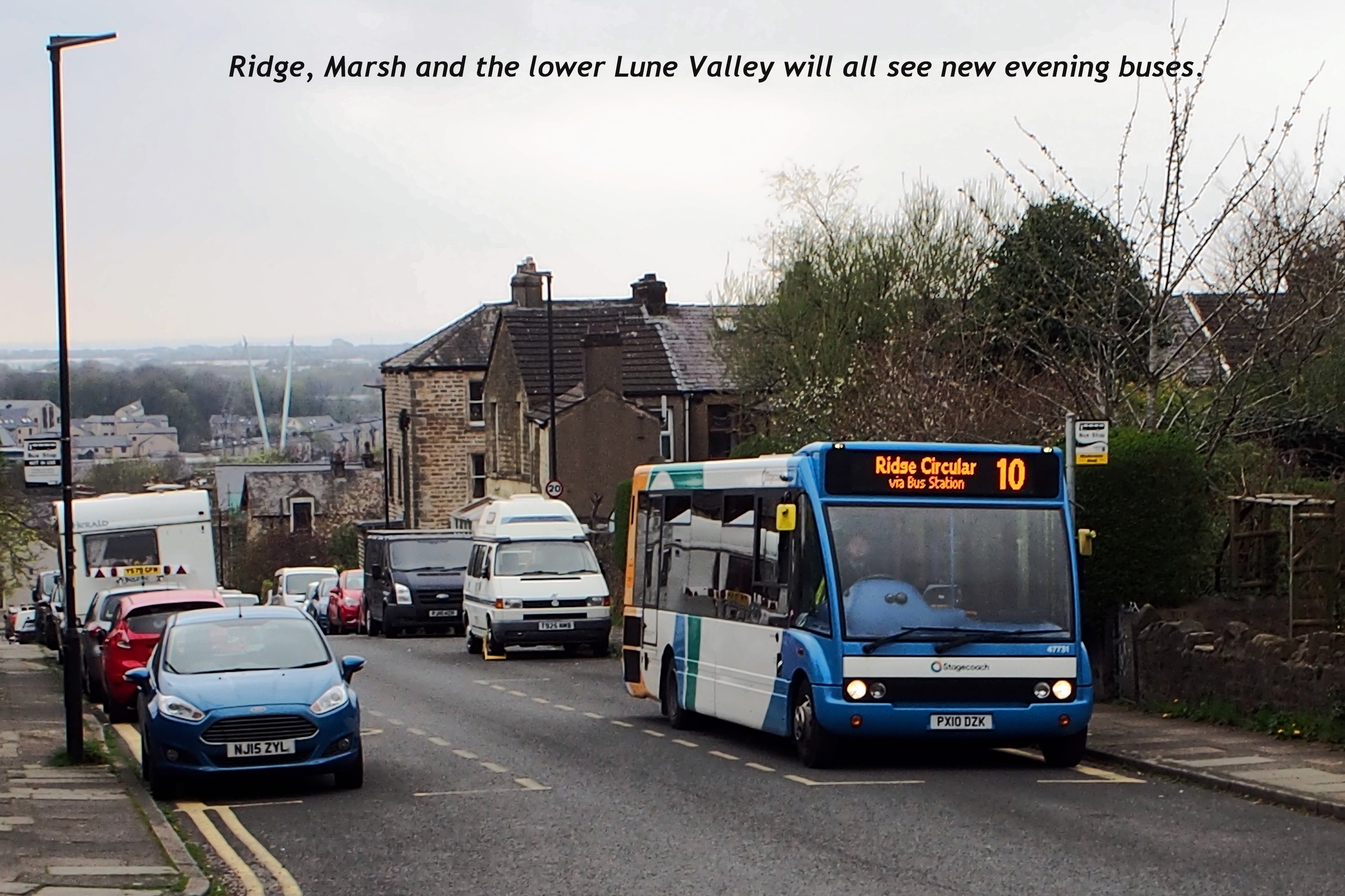
£1.32m will be allocated to improving bus services. For Lancaster this means that an hourly evening service (Monday to Saturday) will be introduced on service 10 to Ridge and 11 to Marsh as well as to Halton, Caton, Brookhouse and Hornby on service 81 or 82.
There are also plans to double the frequency of buses between Lancaster and Morecambe on service 100 via Bare on Sundays.
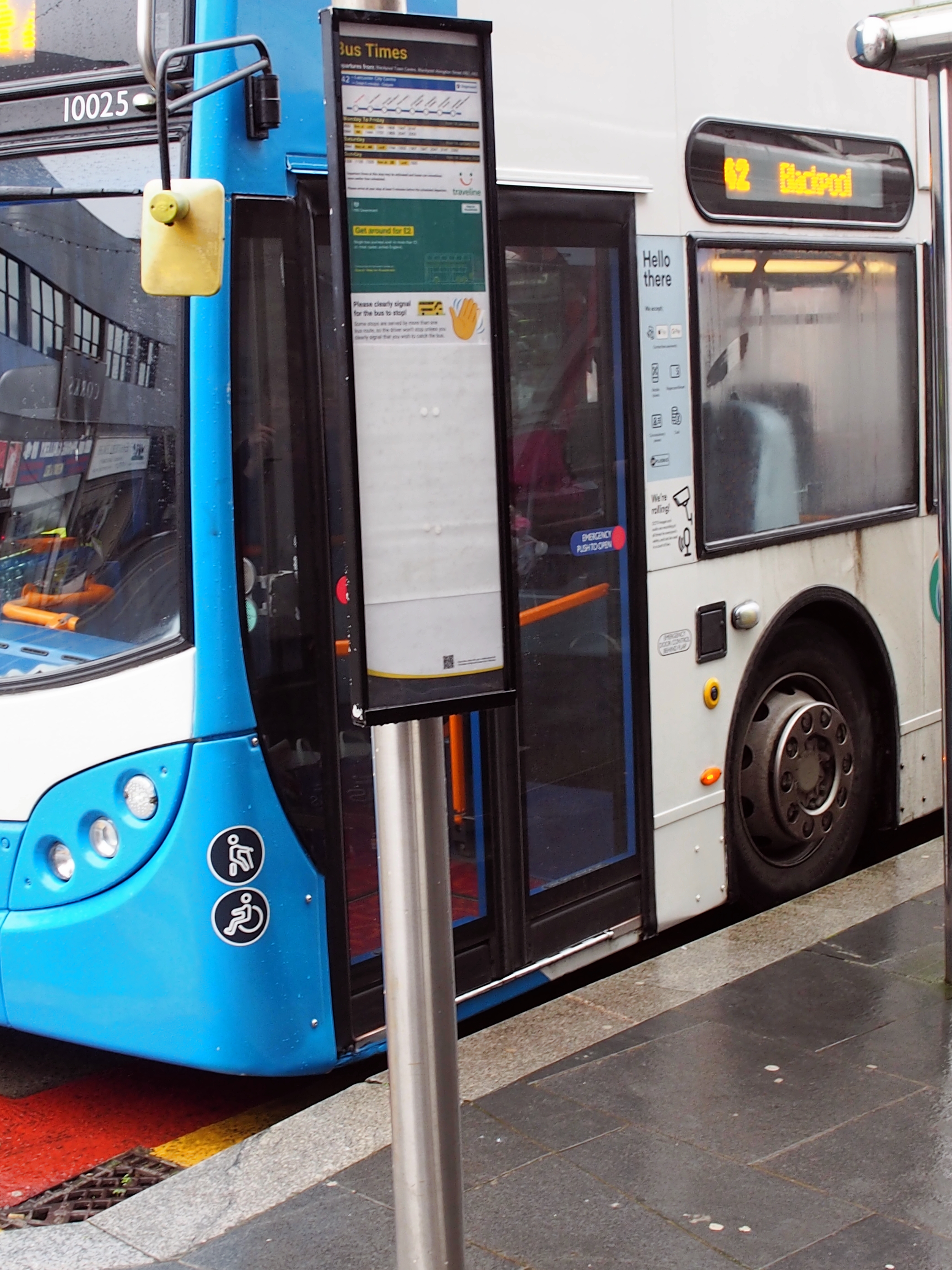
All three of these improvements were requested by the Bus Users’ Group following suggestions from members. It is hoped by the council that the evening services at least will be introduced “for the summer”. There will also be a small improvement to the weekday morning timetable on service 42 Lancaster-Blackpool.
Bus Priority
Sadly, there has not been as much progress on the various bus priority schemes proposed under BSIP1. There have been further objections to the revised parking restrictions on Bowerham Road meaning that they will have to be reviewed, whilst the seemingly straightforward (to a layman’s eyes) improvement to bus priority at the junction of Scale Hall Lane and Morecambe Road has been referred back to the traffic signals team to “revise the initial proposal”, which rather suggests someone got it wrong first time.
The improvements to the junction of Bowerham and Barton Roads to make it easier for buses to negotiate need further survey work as “the gradient means further investigation is needed on how best to lay the junction out”. (The gradient is, of course, the principal reason why the junction needed improving in the first place!)
Bus priority at traffic signals on the city centre gyratory has been outsourced to contractors, but will have to wait until they have finished working of various projects in the Preston area before anything happens locally.

 Lancaster Bus Users' Group