Real Time Information at the bus stop

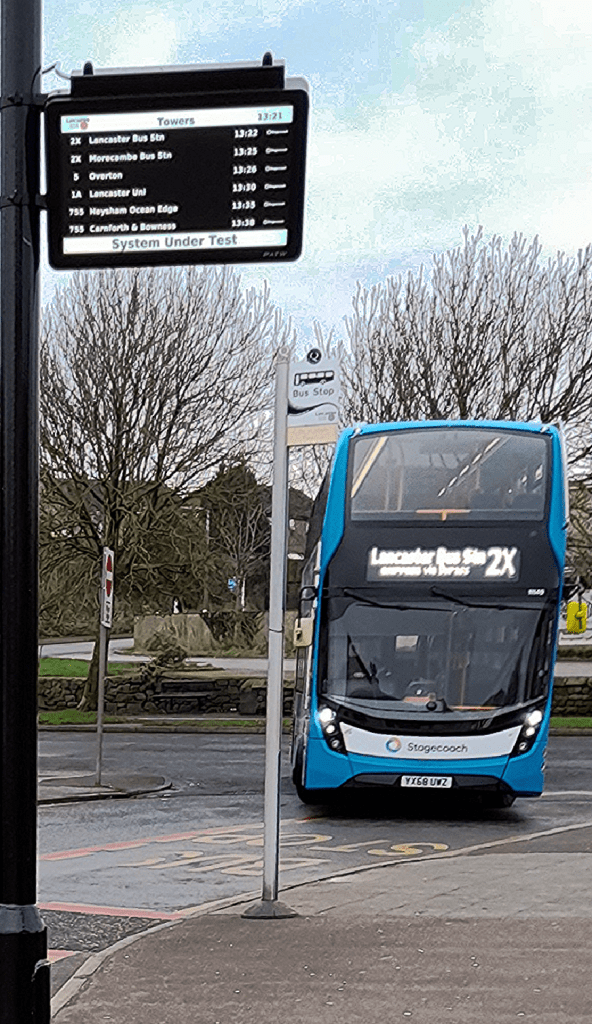
The display at Heysham Towers (c) Graeme Austin

Reports are coming in of the new real-time information displays that are being erected at bus stops in a number of places in the Lancaster District.

Being provided with funding from the government through the county council’s Bus Service Improvement Plan, the displays show forthcoming departures from stops and the actual time at which the buses can be expected to arrive.

So far, they have been seen at Heysham Towers, Euston Road, Morecambe and in Carnforth.
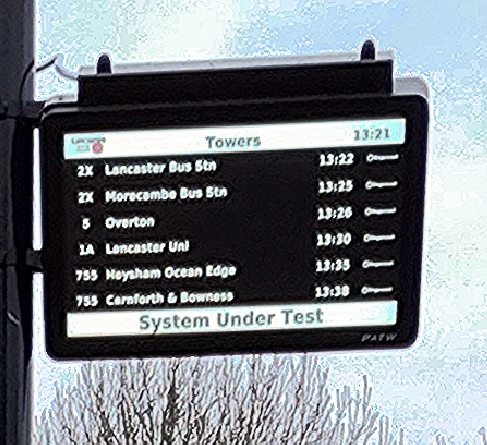
The displays show the name of the stop and the current time, followed by details of the next six buses due to arrive. Each line shows the service number, destination, arrival time and bus operator for the journey.

Common sense

It is unclear as to how far AI (“artificial intelligence) has played a part in the system, but it is good to see that “common sense” has been employed and the screens correctly describe the 755 as going to “Carnforth and Bowness”. This service has to registered in two parts, either side of Carnforth, to get round comply with the rules on working time for drivers, which are different for long-distance services. Many systems can’t cope with this and would erroneously show “Carnforth” as the destination, treating the extension to Bowness as a separate service and causing confusion to anyone expecting a bus to Bowness.

The bottom line of the display currently confirms that the system is still being tested, but presumably could be used for messages to be displayed to passengers in times of major disruption. As things are still under test, the county council would welcome any feedback and we will be happy to pass on any observations left in the comments below or on our Facebook page.

Meanwhile…

Lancaster’s earlier real time information display, at the bus station, has been out of use for some time, but we understand that moves are being made to get it operational again, hopefully before too long,

Stagecoach Fares to Rise

In what appears to be a co-ordinated move across much of the Stagecoach Group, bus fares are set to rise in July.

The government’s national £3 fare cap restricts bus companies’ ability to increase fares, but it does still allow some scope, especially with daily and weekly tickets that are not covered by the cap.

Locally, Stagecoach says that its £2 fare will rise to £2.10 and journeys priced at £2.30 will rise to £2.40 but that there will be no other changes to single fares and the £3 cap remains in place.

The company claims that most customers will not see a change to the fare they pay, but the popular Bay Area DayRider ticket, which currently operates as a surrogate day return for many passengers, will increase from £5.70 to £6 and will no longer offer a discount over two capped single fares. The Lancashire Day Ticket, which covers a wider area, remains at £10 and the North West Explorer , covering Lancashire, Cumbria and into Scotland and Northumbria has also been frozen at £12.

Child and Young Person Fares

Child and Young Person (under-19) fares are also going up, with slightly higher increases in percentage terms to bring them up to 2/3rds of the Adult fare. The £1.30 and £1.50 child fares both increase by 10p

Despite the steadily diminishing number of passengers paying in cash, bus companies still feel the need to round-up fares to the next 10p to reduce the need to handle change, which inevitably means higher percentage increases for some fares. A major victim this time is the Child and Young Person DayRider, which rises from £4 to £4.30 – a 7.5% increase compared to the 5.3% applied to the adult ticket, both increases being above the prevailing level of inflation.

Weekly Tickets

The 7-day Bay Area MegaRider is increased by £1 to a new rate of £22 but still offers a substantial discount over paying day or single fares. The North West Gold MegaRider also goes up by £1 to £37.

When?!

In a move that makes it look as if Stagecoach desperately needs the money, the increase comes into effect on 16 July – a Wednesday! It appears that the days when new fares were introduced on a Sunday, to give drivers and passengers a chance to get used to them on a quieter day of the week, are long gone and perhaps, in the days of payment by card, phone or app, no longer necessary.