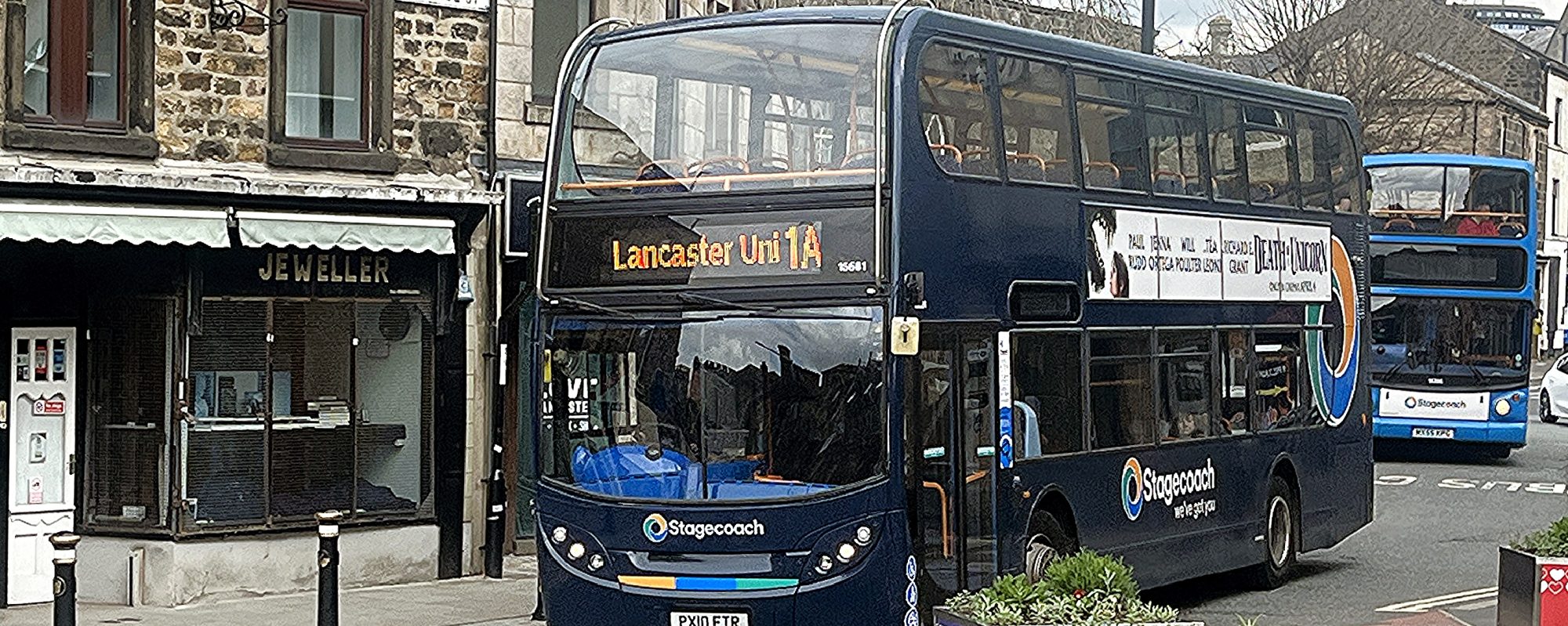

Students hit with bus pass price hike

Whilst Stagecoach’s fares increase earlier this month was very modest (and, of course, constrained by the £3 fares cap) one group of passengers will see a much larger rise in travel costs.

Students at Lancaster University are complaining about what appears to be a huge increase in the price of Unirider tickets, compounded by the withdrawal of one of its most popular versions.

Unirider tickets offer unlimited travel in the Bay Megarider area but are only sold to students. With Lancaster University’s campus being 5km south of the city centre and with large numbers of students living in the city, buses are a popular method of transport, with fourteen buses an hour running between the two in term time and more at peak times.

Increase

In previous years, Uniriders came in three versions: A one-term ticket; a three-term ticket covering the academic year but not the vacations and an annual pass that gave a full twelve-months travel. In 2025/6 the three-term ticket cost £389, increased from £360 the year before. The Annual ticket was priced at £499. However, for the forthcoming academic year the three-term ticket is not offered, leaving students with a choice of a One Term Ticket at £174 (three of which would cost £522 but exclude vacations) or the annual ticket at the new price of £555.

Whilst the price of the annual ticket itself has risen by 11% (at a time of 3% inflation), students who would have bought the Three Terms ticket at £389 are faced with a hike of 34% if they choose three one-term tickets (excluding vacations) or 42.6% if they opt for the Annual at £555.

Simplification

Stragecoach’s Managing Director, Tom Warterhouse, defended the increase, saying that the range of tickets had been “restructured” and “simplified” for the coming academic year.

He told the Bus Users’ Group: “The Term ticket still offers incredible value for money at £2.32 unlimited travel per day and the annual at £1.54 per day. As with the previous £2 capped fare, students can choose whichever duration of ticket they wish, but our UniRider range of products still offers much better value for the large number of students making regular journeys.

Alternatives

Despite the increases, the Unirider still appears to offer savings over the alternatives, which are all that is on offer to other passengers:

Single Tickets: Stagecoach’s response (above) quotes costs that appear to be based on 75 days travel for the termly ticket and 360 days for the annual. The single fare between the Campus and the City Centre is £2.20, forecast to reduce to £2 from January. Assuming two single journeys per day, 75 days travel would cost £330 in term one and £300 in terms two and three, a total of £930 for the year (excluding vacations).

Day Rider Tickets At £6.20, a Day Rider ticket is only worth buying if more than three single journeys are made in any one day. When fares are capped at £2, four single journeys per day will be necessary before a saving is made.

Weekly and Monthly Tickets: Alternatively, Eleven 7-day tickets at £23 would cost £253 per term (£759 per year) or 3 x 28 day tickets at £74 each would work out at £242 for a term (£726 per year) in both cases excluding vacations.

The Unirider ticket, even at its new, higher, price still appears to be significantly cheaper than the alternatives.
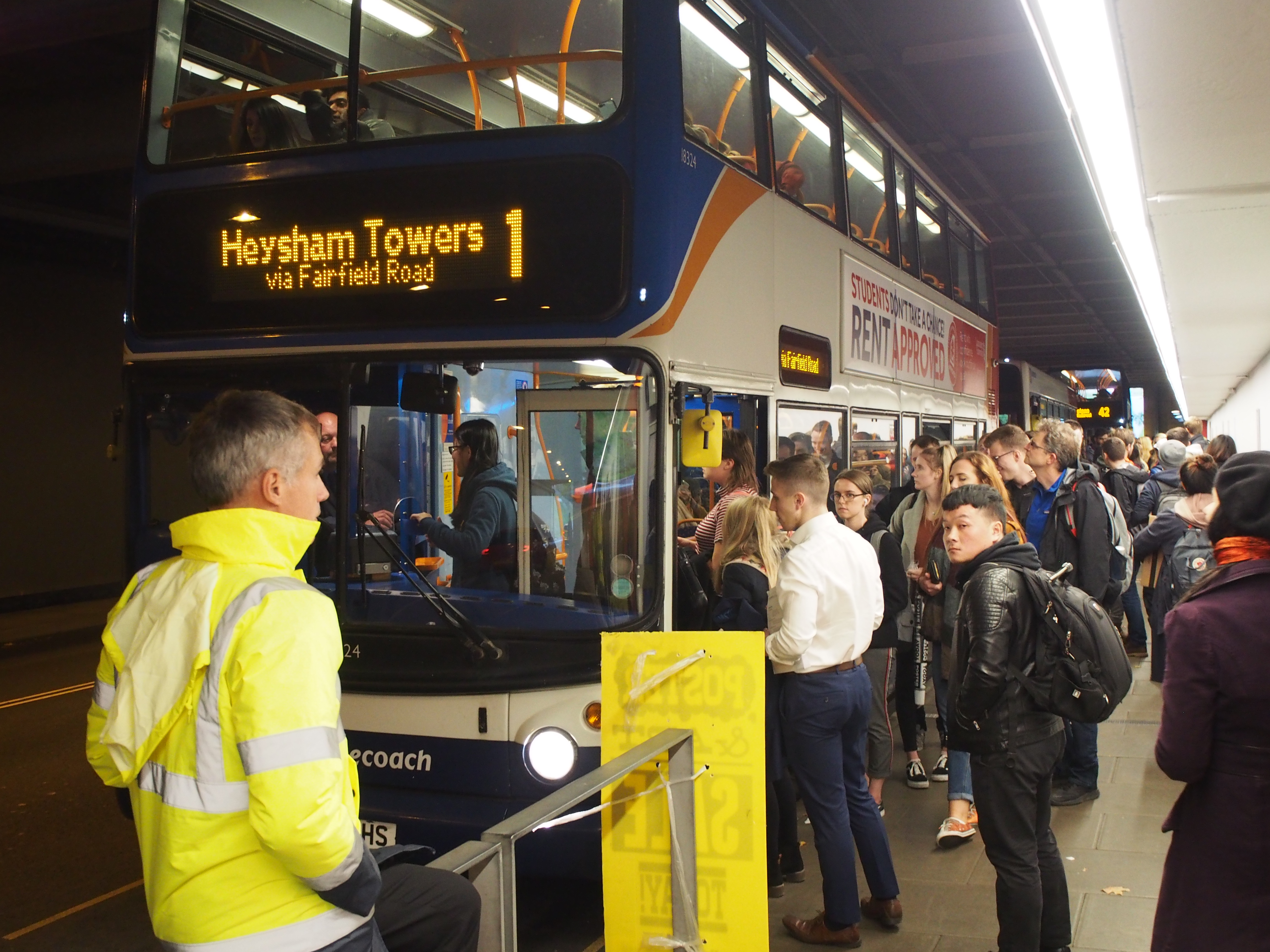
Students are good business for Stagecoach

Law of Unintended Consequences?

Although under our deregulated bus system operators have complete commercial freedom when it comes to fares, in practice recent years have seen them constrained by a number of government initiatives. The most prominent of these is the fares cap, which has seen fares capped at £2 (2023-2025); £3 (2025-2026) and now £2 for 2027. Although the cap applies only to adult single fares, in practice it has limited the extent to which daily, weekly or monthly ticket prices can be increased before they become more expensive than singles for regular travellers.

Whilst the governemt compensates bus companies for the loss of income, the amounts paid are apparently non-negotiable and dependent on what theDepartment for Transport thinks is appropriate. Some bus companies have been disatisfied with the compensation on offer and have not participated in the scheme, which is volunatry.

With most fares effectively capped, and costs such as fuel continuing to rise, it wouldn’t be surprising if bus operators were looking for ways to increase revenue from those tickets that are not affected by the cap. By the end of 2027, single fares will have been capped for five years and the cap could, of course, be extended, putting more prerssure on bus operators to look for other ways of increasing revenue in future.
Stagecoach changes its timetables

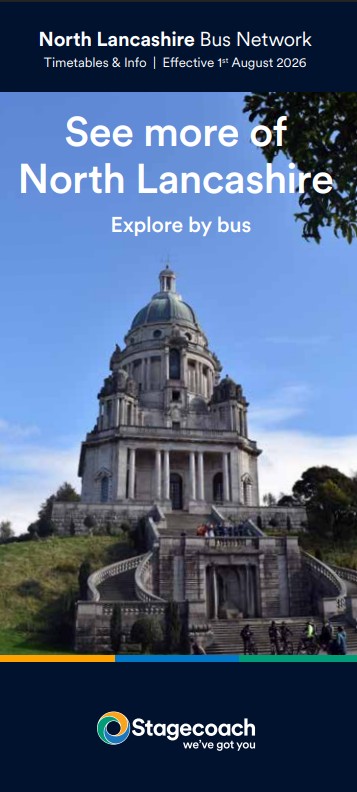
Stagecoach has changed the way it publishes its printed timetables for Lancaster and Morecambe, bringing them into line with other parts of the network. A new 69-page booklet, in a similar style to the popular “Lakes by Bus” publication, includes (almost) every Lancaster and Morecambe-based service and replaces a whole series of individual service leaflets.

Design

The Guide contains a network map, unfortunately not to the same high cartograpic standard as that in the Lakes Guide, but nevetheless adequate; a list of the bus services contained and a three-stage “How to Catch the Bus” section. Presumably aimed at those new to bus travel, or considering in for the first time, this takes readers through the process of planning a journey and buying a ticket. The third stage, however, entitled “Go”, advises passengers to “Wave the bus down and enjoy the journey”. New users – or those from other parts of the world where bus travel is less formal – could be forgiven for not realising that the “waving down” has to be done at a recognised bus stop!

Also included are some ideas for days out on the bus to local attractions and details (but not prices) of tickets. (A QR code link is provided for these).

Timetables

The timetables themselves follow the standard Stagecoach pattern in a clear and easy-to-read format, although those with poor colour vision might struggle to understand the purpose of the various shadings applied to some journeys. One fault concerns services 1/1A, 4 and 100 that serve Lancaster University and have significantly different service levels in term time and holidays. Both levels of service are shown, but unlike some previous leaflets there is no information on when “term time” and “holidays” actually are. Instead, passengers are asked: “For Lancaster University term dates, please check their website”(sic). It wouldn’t have been difficult to provide an actualwebsite adress, the Bus Users’ Group can do it on our website after all. In practice, there is plenty of room in the booklet to provide the actual dates for the whole of the forthcoming academic year and these are known well in advance.

Only Stagecoach services are included as the “Enhanced Partnership of Operators and Councils” doesn’t appear to extend to comprehensive timetables yet. On the two services where Stagecoach provides part of the timetable and Lonsdale Buses the remainder – the 18 and 81 – only Stagecoach journeys are shown and passengers are just informed that the other operator provides the rest, again with no website address or other means of establishing the full timetable.

Unfortunately, unlike recent leaflets, it appears that there is no room for the Bus Users’ Group logo in the new publucation.

Dates of Operation

The cover carries the apparently arbitrary date of 1st August (no timetables actually changed on this date), although the timetable for service 55 doesn’t apply until 30th August, when minor changes will be introduced. Unlike the Lakes Guide, there is no end date to validity. This is a common problem with bus timetables and produces unceratinty over accuracy as time goes on. The Group hopes that Stagecoach will resist the temptation to make minor changes, or at least to save them up and combine them with sufficiently large revsions that justify re-issuing the whole Guide. Better still would be to submit to the discipline of a published “until” date and delay any chnages until then, so that passengers know where they stand. This has been practice in the Lakes Guide for several years and hasn’t prevented the introduction of additional services during the validity period.

Missing Links

The 555 and 755 timetables can only be found in the Lakes Guide

Two important services are missing from the Guide. The 555 Lancaster to Kendal and 755 Heysham to Bowness have only QR codes that enable suitably-equipped passenegrs to read the timetables on their smartphones. For print copies it is necessary to obtain a copy of the Lakes Guide.

Omitting these services saves just five pages of print (out of 69) and the current timetables for these services run until 1st November, by which time Stagecoach is more than lilely to want to make changes to Lancaster services anyway. The Group feels that they should be included.

The booklet is available from Lancaster Bus Station and it is promised that copies will also be available on the buses, although we have yet to see one.

Despite these minor “niggles” the Bus Users’ Group recognises and supports Stagecoach’s commitment to printed timetables and the fact that putting (almost) everything in one booklet makes it much easier for passengers to get the full picture of the services available to them. Who knows, it might even encorage people to make additional bus journeys to places that they didn’t even know they could get to!