Fitting send-off for bus enthusiast, Christopher

Some people feel that large bus companies such as Stagecoach are focussed solely on maximising profits for their shareholders and take nothing else into consideration. But whilst it is true that profitability is important, at a local level Stagecoach can also show a more human side.

A good example of this was reported in the Lancaster Guardian, which we are pleased to reproduce below, with full permission from the family.

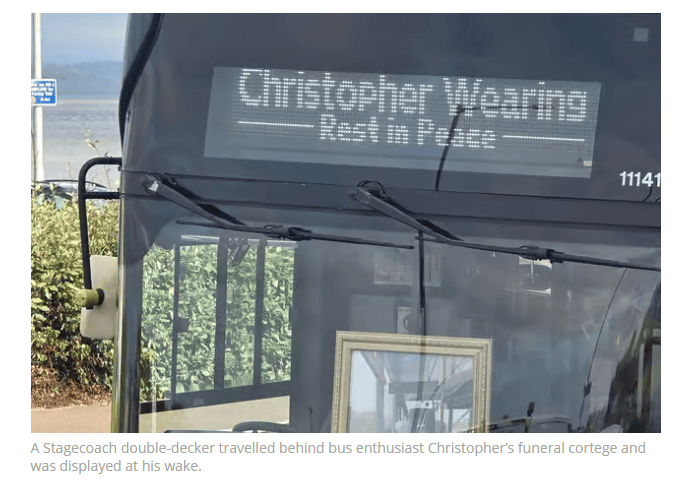
A much-loved bus enthusiast was given a fitting final journey when a Stagecoach double-decker travelled behind his funeral cortege as a special tribute to his passion for buses.
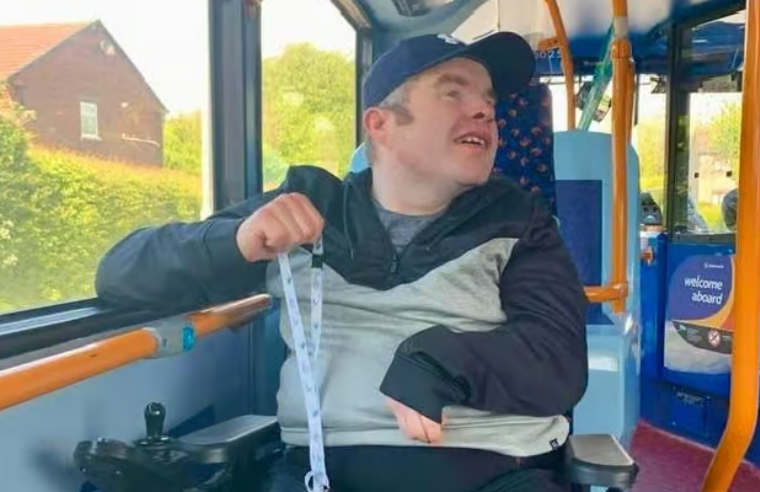
Christopher Wearing, bus enthusiast and regular passenger on the 6A

Christopher Wearing, who tragically passed away recently, was a well-known and much-loved character in Lancaster and Morecambe and a regular customer on Stagecoach’s 6A service.

His love of buses, particularly the 6A, was well known to Stagecoach colleagues at Morecambe depot, where Christopher would often stop to chat with drivers and other members of the team. He was also a keen collector of bus timetables.

Following discussions with Christopher’s family, Stagecoach arranged for a double-decker to follow the funeral cortege from his home on September 29, travelling alongside the hearse until the route reached the Lancaster and Morecambe Crematorium lane.

The bus then travelled to the Auckland Hotel on Morecambe Promenade, where Christopher’s wake was being held, and remained there for two hours so that family and friends could take photographs and remember him alongside something that had brought him so much enjoyment.

The bus carried a portrait of Christopher as a final tribute to a customer who had made a lasting impression on the Stagecoach team.
Paul Deakin, inspector at Stagecoach’s Morecambe depot, said: “Christopher was a very well-loved customer who had been travelling with us for many years. He always loved travelling on the 6A and would regularly come over for a chat with us. He also loved collecting bus timetables.

Tom Waterhouse, managing director for Stagecoach Cumbria and Lancashire, said: “We’re proud to serve the communities of Lancaster and Morecambe, and Christopher was a much-loved part of that community.

“The impact he made on our colleagues was enormous. He was an amazing individual, and providing a bus carrying his portrait was a fitting tribute to someone whose passion for buses was such an important part of his life.

“We were very pleased to be able to support Christopher’s family and friends in marking his life in such a personal way.”
Students hit with bus pass price hike

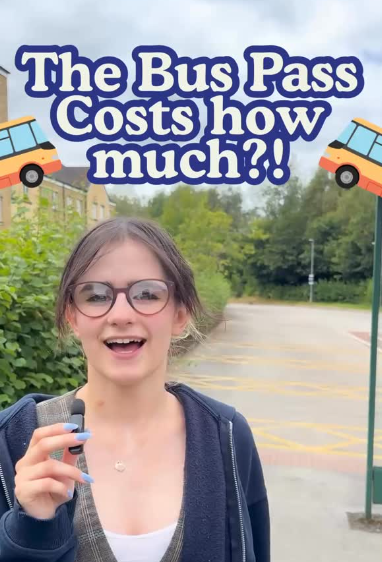
Whilst Stagecoach’s fares increase earlier this month was very modest (and, of course, constrained by the £3 fares cap) one group of passengers will see a much larger rise in travel costs.

Students at Lancaster University are complaining about what appears to be a huge increase in the price of Unirider tickets, compounded by the withdrawal of one of its most popular versions.

Unirider tickets offer unlimited travel in the Bay Megarider area but are only sold to students. With Lancaster University’s campus being 5km south of the city centre and with large numbers of students living in the city, buses are a popular method of transport, with fourteen buses an hour running between the two in term time and more at peak times.

Increase

In previous years, Uniriders came in three versions: A one-term ticket; a three-term ticket covering the academic year but not the vacations and an annual pass that gave a full twelve-months travel. In 2025/6 the three-term ticket cost £389, increased from £360 the year before. The Annual ticket was priced at £499. However, for the forthcoming academic year the three-term ticket is not offered, leaving students with a choice of a One Term Ticket at £174 (three of which would cost £522 but exclude vacations) or the annual ticket at the new price of £555.

Whilst the price of the annual ticket itself has risen by 11% (at a time of 3% inflation), students who would have bought the Three Terms ticket at £389 are faced with a hike of 34% if they choose three one-term tickets (excluding vacations) or 42.6% if they opt for the Annual at £555.

Simplification

Stragecoach’s Managing Director, Tom Warterhouse, defended the increase, saying that the range of tickets had been “restructured” and “simplified” for the coming academic year.

He told the Bus Users’ Group: “The Term ticket still offers incredible value for money at £2.32 unlimited travel per day and the annual at £1.54 per day. As with the previous £2 capped fare, students can choose whichever duration of ticket they wish, but our UniRider range of products still offers much better value for the large number of students making regular journeys.

Alternatives

Despite the increases, the Unirider still appears to offer savings over the alternatives, which are all that is on offer to other passengers:

Single Tickets: Stagecoach’s response (above) quotes costs that appear to be based on 75 days travel for the termly ticket and 360 days for the annual. The single fare between the Campus and the City Centre is £2.20, forecast to reduce to £2 from January. Assuming two single journeys per day, 75 days travel would cost £330 in term one and £300 in terms two and three, a total of £930 for the year (excluding vacations).

Day Rider Tickets At £6.20, a Day Rider ticket is only worth buying if more than three single journeys are made in any one day. When fares are capped at £2, four single journeys per day will be necessary before a saving is made.

Weekly and Monthly Tickets: Alternatively, Eleven 7-day tickets at £23 would cost £253 per term (£759 per year) or 3 x 28 day tickets at £74 each would work out at £242 for a term (£726 per year) in both cases excluding vacations.

The Unirider ticket, even at its new, higher, price still appears to be significantly cheaper than the alternatives.

Students are good business for Stagecoach

Law of Unintended Consequences?

Although under our deregulated bus system operators have complete commercial freedom when it comes to fares, in practice recent years have seen them constrained by a number of government initiatives. The most prominent of these is the fares cap, which has seen fares capped at £2 (2023-2025); £3 (2025-2026) and now £2 for 2027. Although the cap applies only to adult single fares, in practice it has limited the extent to which daily, weekly or monthly ticket prices can be increased before they become more expensive than singles for regular travellers.

Whilst the governemt compensates bus companies for the loss of income, the amounts paid are apparently non-negotiable and dependent on what theDepartment for Transport thinks is appropriate. Some bus companies have been disatisfied with the compensation on offer and have not participated in the scheme, which is volunatry.

With most fares effectively capped, and costs such as fuel continuing to rise, it wouldn’t be surprising if bus operators were looking for ways to increase revenue from those tickets that are not affected by the cap. By the end of 2027, single fares will have been capped for five years and the cap could, of course, be extended, putting more prerssure on bus operators to look for other ways of increasing revenue in future.